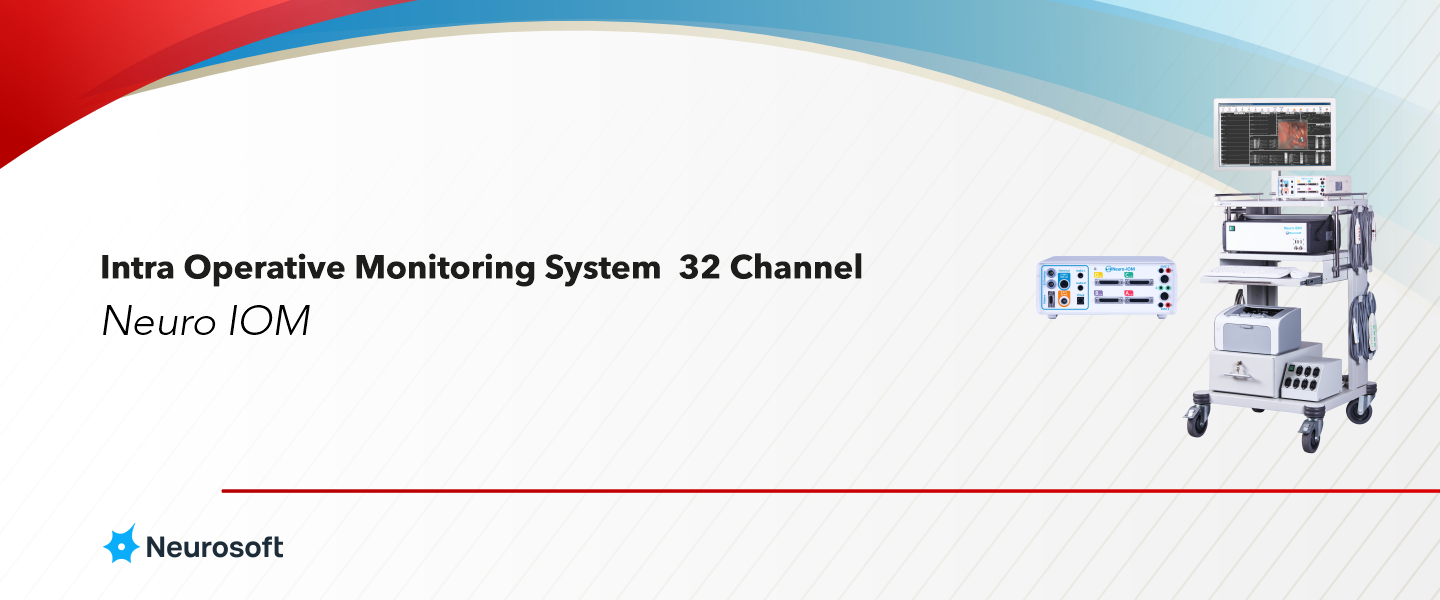
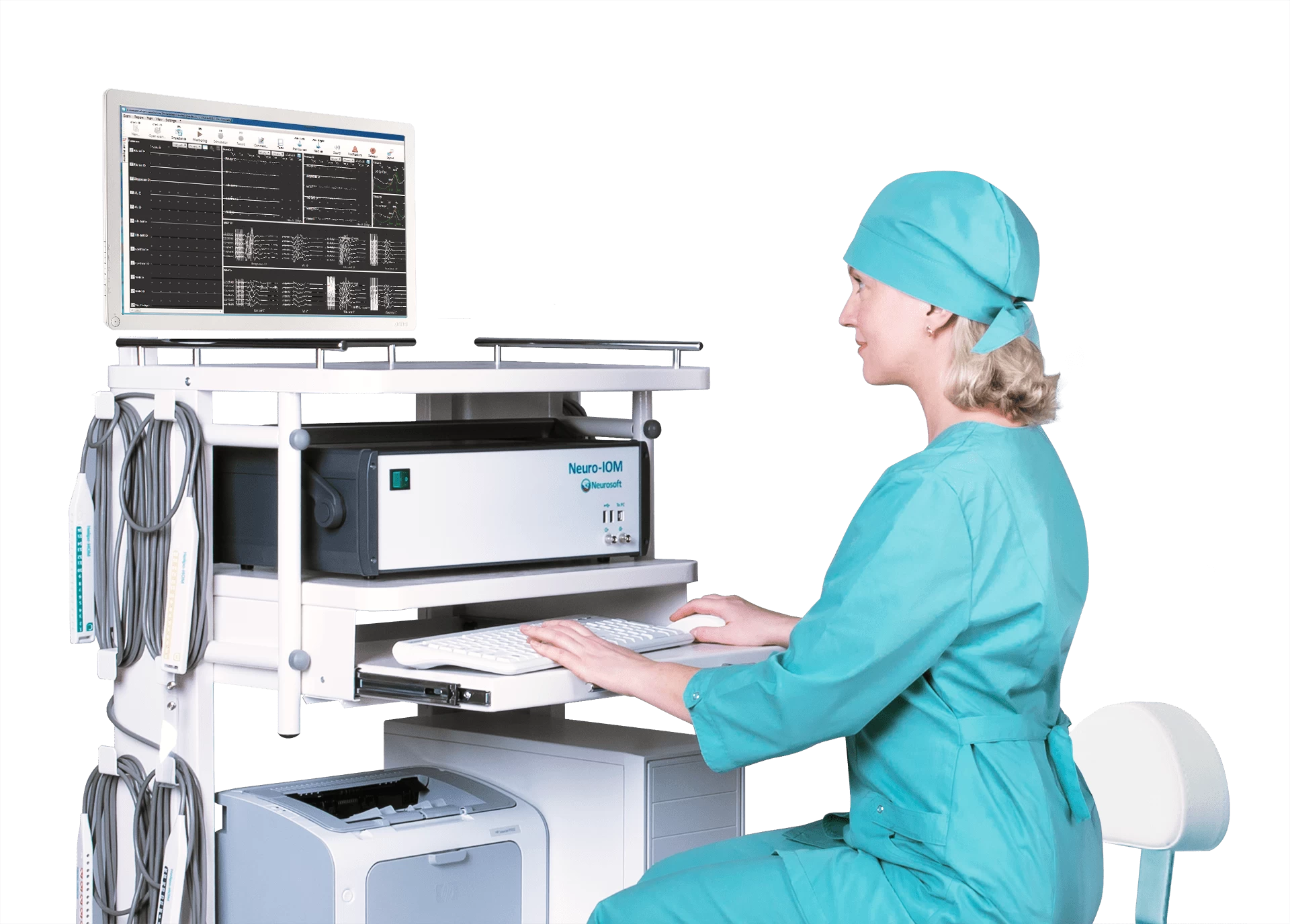
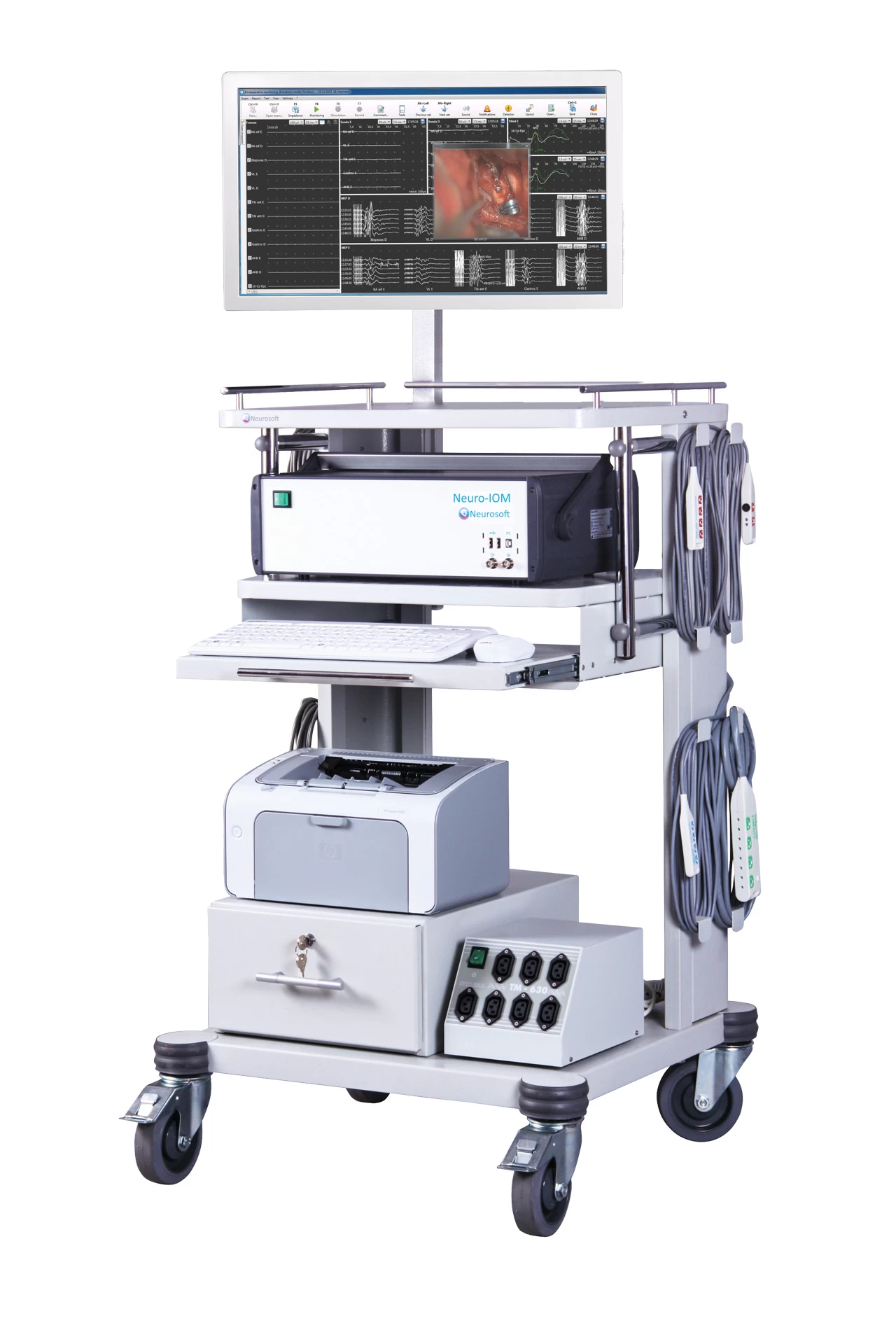
Neuro-IOM is a multifunctional modular platform solution for intraoperative neurophysiological monitoring (IONM). Its application allows the surgical team to be informed about possible damage of nerve tissues resulting from surgeon actions and, thus, to prevent neurological deficit.
In most countries intraoperative neurophysiological monitoring is a must for various types of surgery, i.e., spine surgery, brain surgery, brainstem surgery, etc. As for the spine surgery (for example, scoliosis) the tactics is directly determined during IONM. Currently, the technique is being implemented actively in our country.
Neuro-IOM is the first Russian intraoperative neurophysiological monitoring system. The large experience in development and manufacture of neurophysiological equipment helped Neurosoft company to enter the IONM market rapidly several years ago. The system was registered in Russia and then the company had got the CE mark to sell the system in European countries. Now, more than hundred of Neurosoft Neuro-IOM systems are used successfully in hospitals and other healthcare facilities of Russia, Brazil, France, Jordan, Turkey, Bulgaria and other countries.
Comprehensive solution for effective intraoperative neurophysiological monitoring
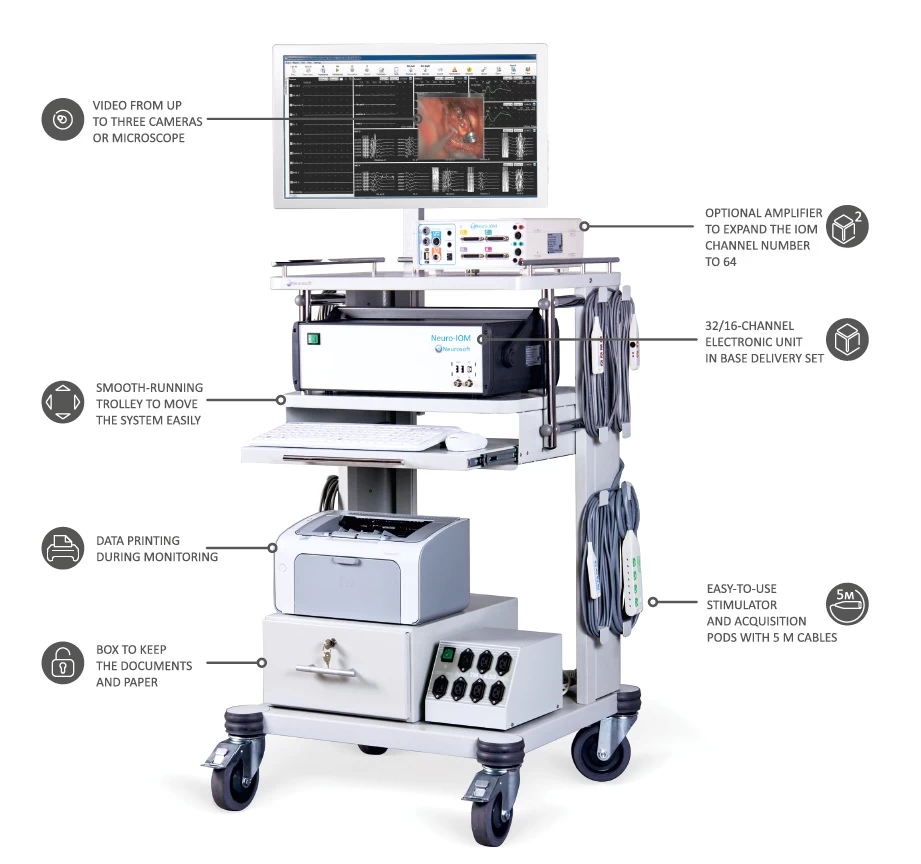
The standard configuration of Neuro-IOM (version 2) is the best solution for any type of neurological surgery. 32-channel amplifier and 4-channel transcranial electrical stimulator (up to 1000 V) with a wide range of pulse waveforms ensure the control of conduction pathways using motor evoked potentials even in the most complicated cases.
Main features:
|
|
|
|
|
|
|
|
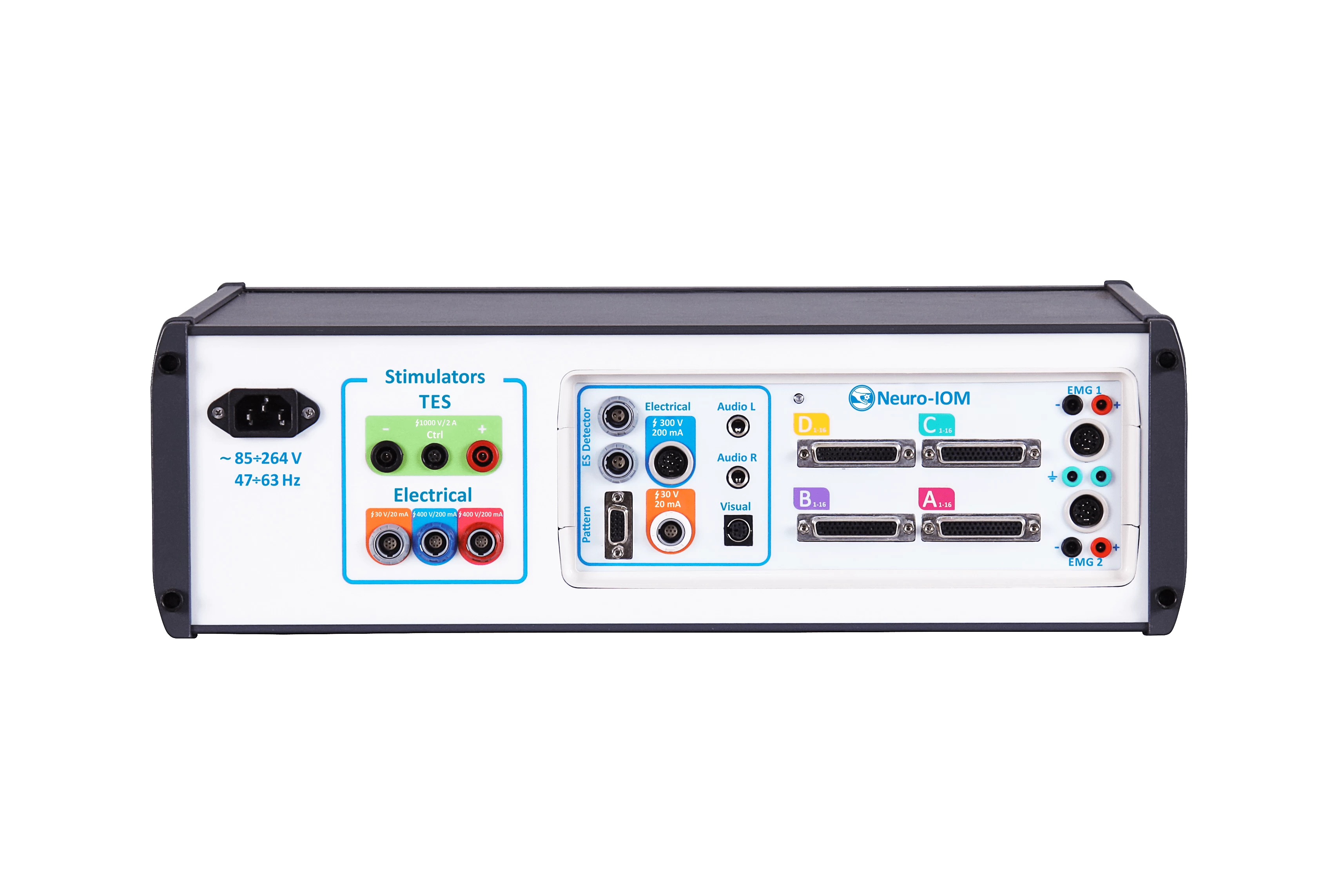
The Neuro-IOM system is equipped with the acquisition and stimulator pods to attach recording and stimulating electrodes with 5 m cables. It allows arranging the system at a distance from the operating table to ensure free movement for the surgical team. The set of specially-designed electrodes, a PC and the software are also included to the delivery set.
Two-in-one: IONM device and 2-channel EMG/EP system
Neuro-IOM can be used as the EMG/EP system, the acquisition channels and all necessary stimulators are built in. This advanced 64-channel configuration of the system includes 4 additional channels for EMG and EP acquisition, while the standard 32-channel configuration includes 2 additional EMG channels.
When the Neuro-IOM system is not in the operating room, it can be used as a common EMG system. Not just an EMG system, but the one produced by Neurosoft!
Motor, somatosensory, auditory and visual evoked potentials, EMG, direct nerve stimulation, EEG, ECoG — more than 10 modalities for intraoperative neurophysiological monitoring
The Neuro-IOM system is delivered with the preset templates ensuring the following modalities:
|
|
|
|
|
|
|
|
|
|
Using these modalities the surgical team can control motor and sensory pathways, monitor peripheral nerve integrity, assess the brain activity and perform mapping of its functional areas, etc.
Transcranial electrical stimulator (up to 1000 V), 12-channel electrical stimulator, low current stimulator, auditory and visual stimulators
Robust stimulators ensure high-quality responses during acquisition of brain evoked potentials and EMG exams.
Transcranial electrical stimulator deserves the special attention. It is intended for stimulation of motor cortex to record motor evoked potentials from muscles. The stimulator ensures single pulse and train stimulation, as well as double train and train + pulse stimulation. Different kinds of stimulation can also be performed using a built-in electronic switch.
Flexible configurations to ensure any monitoring needs
The Neuro-IOM.NET software provides a set of default templates for various types of surgeries. Each template includes the settings of modalities for a particular type of surgery, test window layouts, acquisition and stimulation parameters, etc. The system has a vast number of channels and stimulators with separate adjustment. Use of preset templates simplifies and speeds up the system setup for surgery.
You can always change and save the settings of any surgery template. It is a unique option for such kind of systems. There is no IONM system in the world that is so flexible!
|
|
|
|
|
|
|
|
|
Amplifier: |
|||||
|
: | 32 channels |
|
: | 0.2 – 4000 Hz |
|
: | 10 µV 150 mV |
|
: | @ -3(±0.5) dB |
|
: | ±10% |
|
: | > 90 dB |
|
: | > 300 MΩ |
|
< 0.6 µV in 5–3000 Hz | |
|
: | < 30 pF |
|
: | > 200 MΩ |
|
: | yes |
|
: | < 0.1 µA |
|
: | –30 to +5% |
|
: | yes |
|
: | 0.2, 0.5, 1, 2, 5, 10, 20, 50, 100, 200, 500, 1000, 2000 Hz |
|
: | 10, 15, 20, 30, 35, 50, 75, 100, 150, 200, 300, 500 Hz, 1, 1.5, 2, 3, 4 Kz |
|
: | 0.1, 0.15, 0.2, 0.25, 0.4, 0.5, 0.75, 1, 1.5, 2, 2.5, 4, 5, 7.5, 10, 15, 20, 25, 40, 50, 75, 100, 150, 200, 250, 400, 500, 750 ms/div; 1, 1.5, 2, 2.5, 4, 5, 7.5, 10, 15, 20 s/div |
|
: | 0.05, 0.075, 0.1, 0.15, 0.2, 0.25, 0.4, 0.5, 0.75, 1, 1.5, 2, 2.5, 4, 5, 7.5, 10, 15, 20, 25, 40, 50, 75,100, 150, 200, 250, 400, 500, 750 µV/div; 1, 1.5, 2, 2.5, 4, 5, 7.5, 10, 15, 20 mV/div |
|
: | ±5% |
|
: | ±1% |
|
: | yes |
|
||
|
Parameters of Electrical Stimulator Built-in Electronic Unit: |
|||||
|
: | 8 |
|
: | voltage of current |
|
: | 425 V ± 25 V at 1 kΩ |
|
: | 0 - 200 mA, 0.1 mA step |
|
: | 0 – 400 V, 1 V step |
|
: | 210 mA ± 10 mA at 1 kΩ |
|
: | rectangular (monophasic, biphasic) |
|
: | ±5% |
|
: | normal, inverse |
|
: | 50 - 5000 µs, 10 µs step |
|
: | not more than 10% |
|
: | single pulse, train |
|
: | ± 5% |
|
: | 0.01 - 100 Hz with 0.05 Hz step |
|
: | 2 – 200 |
|
: | 2 to 10 ms (± 5%) with 0.08 ms step |
|
: | ± 0.01 ms |
|
: | 2 |
|
: | Rectangular, < 10µ nse time |
|
: | normal, inverse |
|
|
: | 0 - 20 mA, 0.01 mA step | ||
|
Transcranial Electrical Stimulator Built-in Electronic Unit: |
|||||
|
: | 1 |
|
: | 1/4 |
|
: | 0 - 1000V, 5 V step |
|
: | Rectangular (Monophasil, Biphasic) |
|
: | Normal, inverse |
|
: | Single Pulse, train, double train, train + pulse |
|
: | 40, 50, 60, 70, 80, 100, 150, 200 µs |
|
||
|
Auditory Stimulator: |
|||||
|
: | 2 |
|
: | Values |
|
: | ±0.1% |
|
: | 0.01 – 100 Hz |
|
: | 100 – 5000 µs (±20 µs) |
|
: | 100 – 5000 Hz |
|
: | 0.1 – 90 ms |
|
||
|
Visual Stimulator: |
|||||
|
: | 2 |
|
: | 2 – 1500 ms |
|
: | ±10% |
|
: | 0.01 – 100 Hz |
|
: | ±10% |
|
: | from 2 to 1500 cd/m2 |
|
Electrosurgery Detector: |
|||||
|
: | 100 mA |
|
: | 2 |
|
Trig in/out Channel: |
|||||
|
: | 1 |
|
: | TTL (high – Uin. > 2.4 V; low – Uin. < 0.8 V) |
|
: | > 47 kΩ |
|
: | TTL (high – Uout. > 4.5 V; low – Uout. < 0.5 V) |
|
: | (1 ± 0.01) ms |
|
: | (1±0.1) kΩ |
|
General Parameters and Specifications: |
|||||
|
: | USB |
|
: | 220±22 V AC (50/60 Hz) |
|
Minimum Computer: |
|||||
|
|||||
|
: | 1 |
|
: | 1 |
|
: | 1 |
|
: | 1 |
|
: | 1 |
|
: | 1 |
|
: | 1 |
|
: | 1 |
|
: | 1 |
|
: | 1 |
|
: | 1 |
|
: | 1 |
|
: | 1 |
|
: | 1 |
|
: | 6 |
|
: | 9 |
|
: | 10 |
|
: | 1 |
|
: | 30 |
|
: | 2 |
|
: | 2 |
|
: | 2 |
|
: | 1 |
|
: | 1 |
|
: | 2 |
|
: | 1 |
|
: | 2 |
|
: | 1 |
|
: | 1 |
|
: | 1 |
|
: | 4 |
|
: | 1 |
|
: | 1 |
|
: | 1 |
|
: | 1 |
|
: | 1 |
|
: | 1 |
|
: | 1 |
|
: | 1 |
|
: | 1 |
|
: | 1 |
|
: | 1 |
|
Aksesoris Lokal: |
|||||
|
: | 1 |
|
: | 1 |
|
: | 1 |
|
: | 1 |